




Secrets Behind Sichuan Opera Face-Changing Props: Hidden Mechanisms in Masks and Costumes
Watching Sichuan Opera Bian Lian (face-changing) is thrilling, and many visitors wonder how performers switch masks instantly or what hidden tricks are tucked into their costumes. In reality, every prop is ingeniously designed, from the masks to the garments, reflecting the wisdom of master artisans. These behind-the-scenes details are rarely known to the public.
1. Masks: More Than Just Painted Faces
Material: Traditional masks are made of satin (more durable than paper and easy to fold), while modern masks also use silk, which is lightweight and resistant to damage. The back is coated with rice paste (sticky enough to adhere but painless to remove), and thin threads are sewn along the edges to connect the mask to hidden mechanisms inside the costume.
Color Code: Red for loyalty, white for treachery, black for integrity, blue for bravery, green for chivalry, and yellow for cruelty. For example, Fa Hai in The Legend of the White Snake uses a white mask, and Zhang Fei in Romance of the Three Kingdoms uses a black mask. Each color reflects the character’s personality.
Crafting Process: Each mask involves four steps: sketching → cutting → coloring → threading. Sketches must be precise, colors evenly applied with mineral pigments to prevent fading, and threads sewn invisibly. It takes about three days to complete one mask.
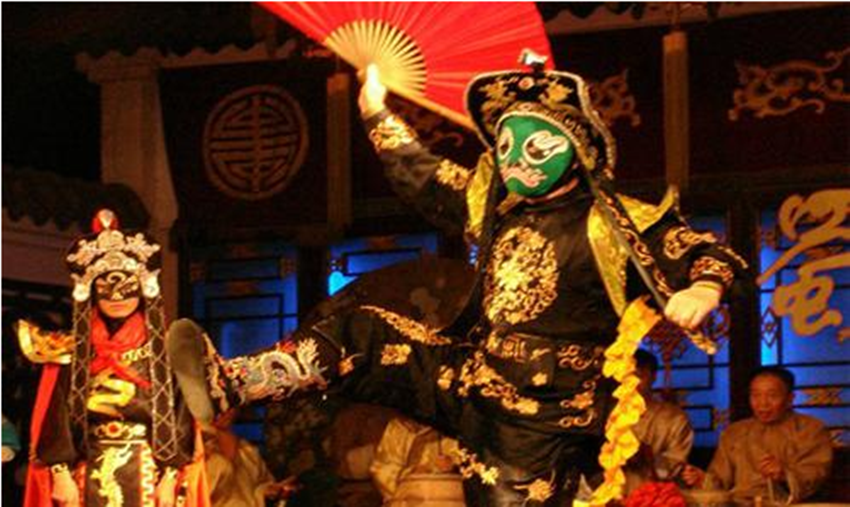
2. Costumes: The Key to “Hiding Faces”
Hidden Mechanisms: Costumes, usually long robes, have internal pockets to store masks. Each pocket corresponds to a specific mask, with threads connecting one end to the mask and the other to buttons or waist ties.
Material Selection: Thick satin robes conceal pockets while providing momentum during the head flick, helping the mask flip smoothly. Bright colors (red, black, blue) complement the mask colors for a visually stunning effect.
Auxiliary Props: Weighted soles on shoes improve stability when flicking the head, and hidden buttons on sleeves secure the threads to prevent accidental mask drops.
3. Other Props: Fire Breathing and Rolling Lanterns
Fire Breathing: Performers hold kerosene in their mouths (flammable but low-temperature for safety). Fire torches are wrapped in kerosene-soaked cloth, and performers control the flame carefully to avoid burns.
Rolling Lanterns: Lanterns are paper-covered with a wax coating for fire safety, with candles fixed on bamboo frames. Performers roll the lanterns using neck and waist movements to maintain balance while spinning.
Travel Tips and Experience:
Combine your Sichuan Opera experience with visits to Chengdu cultural tours, Kuanzhai Alley, Jinli Ancient Street, or family-friendly Chengdu activities. Learn the secrets of face-changing firsthand with guided tours. Chengdu Travel Agency offers authentic performances, behind-the-scenes workshops, and safe transportation for a complete cultural adventure.

